- Guide required?
- No — unlike the Inca Trail
- Permit required?
- None
- Independent cost
- ≈ US$175–250
- Guided cost
- ≈ US$350–700
- Phone signal
- Almost none en route
We sell guided treks, so take this for what it is worth: the answer to this question is yes, and anyone who tells you otherwise is selling harder than we are. The Salkantay is not the Inca Trail. There is no permit, no quota and no rule requiring a licensed guide. If you want to walk it on your own, you can, and a great many people do.
What follows is what that choice actually involves — including the parts that make people change their minds, and the parts that make guided trips look overpriced.
The short answer
Legal: yes. Feasible for a reasonably fit, reasonably experienced walker: yes. Feasible for someone whose first multi-day hike this is, at altitude, in a country they have not travelled before: possible, but it is a lot of firsts at once.
Why it is possible here and not on the Inca Trail
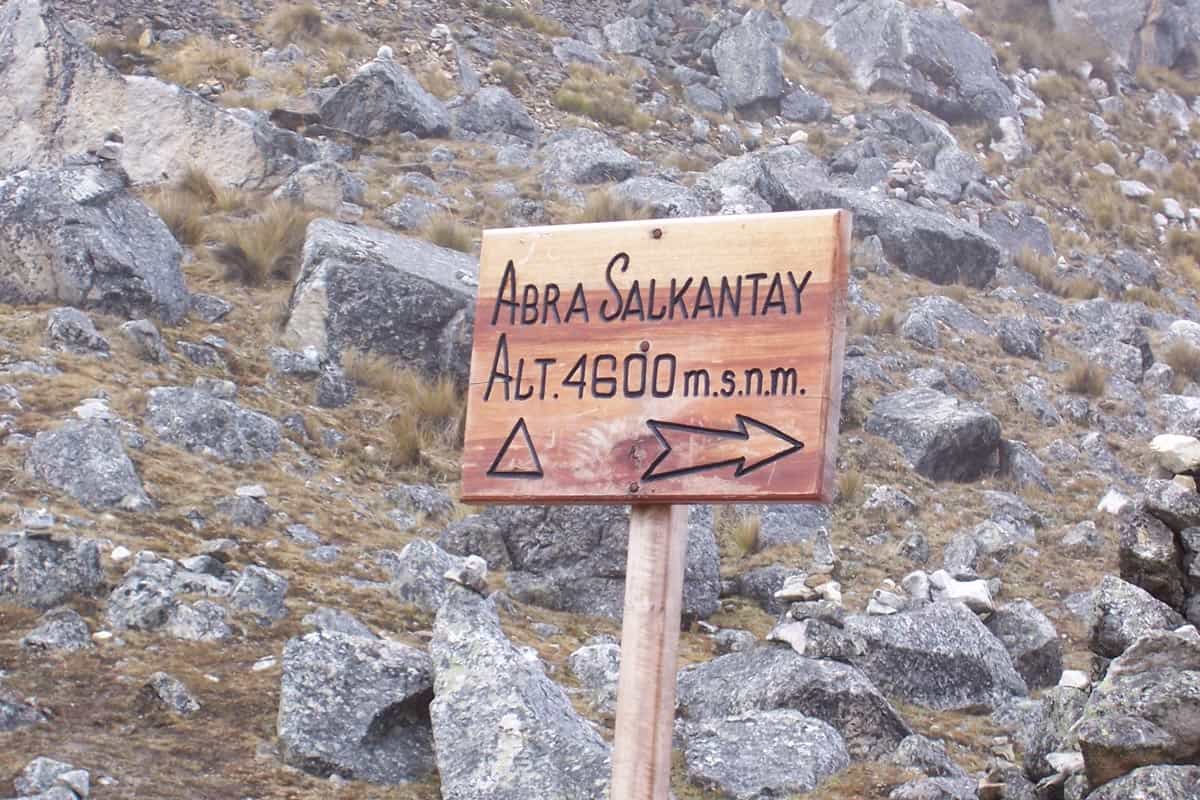
The Inca Trail is a regulated archaeological route with 500 permits a day and a legal requirement for licensed guides. The Salkantay crosses a pass between two mountains on public ground. Nobody counts you, nobody checks you, and the only ticket in the whole trip is the Machu Picchu entrance at the end. See the permits page for the detail.
What it actually costs
Independent trekkers generally land between US$175 and US$250. That covers hostel or homestay beds, meals bought along the way, the collectivo out to the trailhead, and the Machu Picchu entrance and train back.
Guided trips run US$350–700. The gap is real, but it is smaller than it looks once you count what you would otherwise buy or carry: a sleeping bag for below-freezing nights at Soraypampa, transport at both ends, every meal, and the horses that mean you walk with a daypack instead of everything you own. The cost breakdown sets out what sits inside a guided price.
Where you sleep
This is what has changed most in the last decade. The route now has hostels, sky-domes, refuges and family homestays at most of the overnight points, so carrying a tent is optional rather than obligatory. In June through August they fill up, and turning up at Soraypampa at dusk in high season without a bed is the single most common way an independent trek goes wrong.
What you are taking on
Navigation in bad weather. The trail is obvious in clear conditions. In cloud, the approach to the pass and the drop into the cloud forest are genuinely disorienting. Offline maps are not optional — download Maps.me or Wikiloc in Cusco, because there is no signal to download them later.
Altitude, alone. Altitude sickness does not care how fit you are, and the pass is 4,630 metres. Unguided means nobody is watching you for the symptoms you are least able to assess in yourself. Acclimatize in Cusco for two or three days first — see the altitude guide.
No evacuation. A sprain, a bad stomach or an altitude case means walking out or finding help in the next settlement. Guided groups carry radios and, in practice, a horse.
Everything on your back. No muleteers means your gear is your problem for five days and 2,700 metres of descent.
Who should, and who probably should not
Go independently if you have done multi-day hikes before, you are comfortable navigating off a phone with no signal, you have time in Cusco to acclimatize properly, and the saving matters more to you than the logistics.
Take a guide if this is your first trek of this length, if you are travelling solo and want the margin that a group and a radio provide, if you would rather walk with a daypack than a full load, or if your dates are tight enough that losing a day to a booking problem would cost you Machu Picchu.
Both are legitimate. We would rather you walked this route well on your own than badly with us.
Common questions
Is it legal to hike the Salkantay Trek without a guide?
Yes. Unlike the Inca Trail, which requires a licensed guide and a permit, the Salkantay route has no guide requirement and no quota. You can walk it independently and legally.
How much cheaper is it to go unguided?
Roughly $175–250 against $350–700 for a guided trip, depending on how you sleep and eat. The gap narrows once you add a sleeping bag, a tent or hostel beds, transport to the trailhead, and the Machu Picchu ticket and train, which you pay for either way.
Do I need a tent?
Not necessarily. There are hostels, refuges and family-run homestays at most of the overnight points now, which is why many independent trekkers carry no shelter at all. In high season they fill, so arriving late without a booking is a real risk.
Is there phone signal on the trail?
Not for most of it. Download offline maps before you leave Cusco — Maps.me and Wikiloc both cover the route — and do not plan on being reachable between Soraypampa and Santa Teresa.
What actually goes wrong for independent trekkers?
Weather at the pass and altitude, in that order. The route is easy to follow in clear conditions and genuinely disorienting in cloud, and altitude sickness is the reason most people who turn back turn back. Neither is an argument against going alone — both are arguments for acclimatizing properly and starting early.